🔑 Key Takeaways
🍔 Restaurant failure rates reveal hidden investor risks
Understanding how often restaurants fail helps investors gauge real business health. High failure rates signal weak unit economics, rising costs, and poor adaptability—factors that can quietly erode stock value before earnings reports show trouble.
💰 Unit-level economics drive long-term profitability
Each restaurant’s financial performance determines whether a chain expands or contracts. Strong unit-level economics support growth and stability, while weak units drain cash flow and force closures that ripple through investor confidence.
📉 Closures reshape comparable sales and cash flow
When restaurants close, comps and cash flow shift dramatically. Investors must look beyond headline numbers to see whether closures are strategic moves toward efficiency or warning signs of deeper financial strain.
🏆 Smart investors balance risk across segments
Diversifying across quick service, fast casual, and full service brands helps manage volatility. By tracking failure rates and management responses, investors can identify resilient companies positioned for recovery and long-term returns.
Why Restaurant Failure Rates Matter for Investors
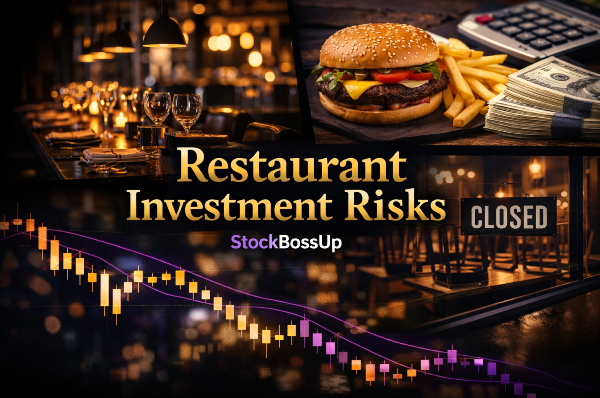
Investors often look at top restaurant stocks with excitement. The industry feels familiar, the brands are everywhere, and the demand for food never disappears. Yet behind the scenes, a quiet problem shapes the entire sector. Many restaurants fail early, and the reasons behind those failures can change the future of a company’s stock. The challenge for investors is that the real impact of these failures is not always obvious at first. The numbers look simple on the surface, but the deeper story takes time to reveal itself. Understanding that story can change how investors judge risk, value growth, and decide where to put their money.
The problem becomes even more important when a company expands too fast or struggles to keep weak units open. Investors often see the headline numbers but miss the hidden pressure building inside the business. That pressure can shape comps, cash flow, and long‑term returns. The full answer to why failure rates matter is not clear until the end of the picture, and the path to that answer runs through unit‑level economics, segment differences, and the financial chain reaction that closures create.
Why Do Restaurant Failure Rates Matter More Than Most Investors Realize?
Restaurant failure rates are not just statistics. They are signals about how well a company can survive competition, manage costs, and scale its business. Restaurants operate with thin margins and high fixed expenses. Rent, labor, utilities, and food costs all rise even when sales slow down. When a unit fails, it exposes weaknesses in the business model or the market. Investors who understand these signals can avoid losses and spot opportunities before others notice them.
Restaurants also face intense competition. New concepts appear every year. Consumer tastes shift quickly. Delivery apps change how people order. A brand that looks strong today can lose momentum in a few quarters. Failure rates help investors see which companies adapt and which ones fall behind.
Unit‑level economics sit at the center of this issue. A single restaurant must generate enough profit to cover its own costs and support the company’s growth. If too many units underperform, the entire chain suffers. Investors who track unit‑level performance gain insight into the health of the business long before earnings reports reveal trouble.
How Do Unit‑Level Economics Shape the Fate of a Restaurant Chain?
Unit‑level economics measure the financial performance of each location. They include revenue, food costs, labor, rent, and other expenses. Strong unit‑level economics support expansion. Weak unit‑level economics force closures. Investors who understand these numbers can predict which companies will grow and which ones will shrink.
A restaurant with strong unit economics can open new locations with confidence. Each new unit adds revenue and profit. A restaurant with weak unit economics faces the opposite problem. New units may lose money. Existing units may drag down the entire company. Investors who ignore these details risk misunderstanding the company’s true value.
One unique fact about the industry is that some restaurant chains have units that reach cash breakeven within months even when build‑out costs are high. This happens when the brand has strong demand and efficient operations. Investors who know this can spot chains with powerful growth potential.
Unit‑level economics also vary by location. A restaurant in a busy urban area may thrive. The same brand in a suburban strip mall may struggle. Local competition, traffic patterns, and customer income all influence performance. Investors who study these differences gain an edge.
Which Restaurant Segments Have the Highest Failure Rates?
Failure rates differ across restaurant segments. Quick service restaurants (QSRs) often have lower failure rates because they rely on speed, volume, and simple menus. Fast casual restaurants sit in the middle. Full service restaurants face the highest failure rates due to higher labor costs, slower table turns, and more complex operations.
Below is a table showing average failure rates and typical unit‑level profit margins across segments:
| Segment |
Average Failure Rate (First 3 Years) |
Typical Unit‑Level Profit Margin |
| Quick Service (QSR) |
20–25% |
10–15% |
| Fast Casual |
30–35% |
8–12% |
| Full Service |
40–50% |
5–10% |
Full service restaurants often look popular from the outside. Yet some of the highest failure rates occur in full service dining even when customer traffic appears strong. High overhead costs and shifting consumer preferences toward convenience and delivery create hidden pressure. Investors who rely only on surface‑level popularity may misjudge the risk.
Fast casual restaurants face their own challenges. They must balance quality with speed. They also compete with both QSRs and full service restaurants. When costs rise, fast casual chains feel the squeeze from both sides.
QSRs benefit from simple menus and efficient operations. They also adapt well to drive‑thru and delivery trends. This gives them a structural advantage during economic downturns.
How Do Closures Affect Comparable Sales and Investor Confidence?
Comparable sales, or “comps,” measure sales growth at existing locations. Investors watch comps closely because they show whether a brand is gaining or losing momentum. When restaurants close, comps can drop even if the remaining units perform well. This creates confusion for investors who do not understand the math behind the numbers.
Closures also change the total number of units. A company with declining unit count may struggle to grow revenue. Even if comps rise, the overall business may shrink. Investors who focus only on comps may miss the bigger picture.
Closures can also signal deeper problems. A company may close units to cut costs. But if closures become frequent, it may show that the brand is losing relevance. Investors who track closure patterns can spot trouble early.
Below is a table showing how different factors influence investor risk:
| Factor |
Positive Impact |
Negative Impact |
| Strong Unit Economics |
Higher profits, growth potential |
Less flexibility in weak markets |
| High Failure Rate |
Potential for market correction |
Increased investor risk, volatility |
| Closures |
Cost savings, improved efficiency |
Short‑term cash flow hit, negative comps |
Investors who understand these dynamics can interpret comps more accurately. They can also judge whether closures are strategic or signs of distress.
Why Do Closures Create a Chain Reaction in Cash Flow?
Cash flow is the lifeblood of any restaurant company. When a unit closes, it stops generating revenue. But some costs continue. Lease obligations, equipment write‑offs, and severance payments all reduce cash flow. A company with many closures may face financial strain.
Negative cash flow forces companies to make tough decisions. They may cut back on marketing, delay new openings, or reduce staff. These decisions can slow growth and weaken the brand. Investors who track cash flow can see these problems before they appear in earnings reports.
Closures also affect debt. Many restaurant companies carry significant debt from expansion. When cash flow drops, debt payments become harder to manage. Investors who understand this risk can avoid companies with fragile balance sheets.
Some companies use closures strategically. They may exit weak markets or shift focus to stronger regions. This can improve long‑term performance. But the short‑term impact on cash flow is still negative. Investors must balance both sides of the equation.
How Do Failure Rates Influence Stock Volatility?
Restaurant stocks often react strongly to news about closures, weak comps, or rising failure rates. Investors may panic when a company announces a wave of closures. Stock prices may fall even if the closures improve long‑term profitability. This creates volatility.
Investors who understand the reasons behind closures can avoid emotional reactions. They can judge whether the company is making smart decisions or reacting to deeper problems. This helps them stay calm during market swings.
Failure rates also influence analyst expectations. Analysts may lower price targets when failure rates rise. This can push stock prices down. Investors who understand the underlying data can decide whether the market is overreacting.
Some investors see opportunity in struggling restaurant chains. If they believe management can turn the company around, they may buy shares at a discount. This strategy carries risk but can lead to strong returns.
What Can Investors Learn from Unit‑Level Performance Trends?
Unit‑level performance trends reveal patterns that help investors predict future results. A company with rising unit‑level profits may be ready for expansion. A company with declining unit‑level profits may face closures.
Investors who track these trends gain insight into the company’s strategy. They can see whether management is improving operations or losing control. They can also judge whether new units are performing better or worse than older ones.
Unit‑level trends also show how well a company adapts to market changes. A brand that improves efficiency during tough times may outperform competitors. A brand that struggles may fall behind.
Below is a table comparing how unit‑level economics influence investor risk:
| Metric |
Positive Signal |
Negative Signal |
| Unit‑Level Profit |
Strong growth |
Declining margins |
| New Unit Performance |
High ROI |
Slow ramp‑up |
| Cost Control |
Stable expenses |
Rising labor or food costs |
Investors who understand these metrics can make better decisions. They can avoid companies with weak fundamentals and focus on those with strong potential.
How Should Investors Respond When Failure Rates Rise?
When failure rates rise, investors must stay alert. They should study the reasons behind the failures. Are they caused by poor management, weak demand, or rising costs? Or are they part of a strategic plan to improve long‑term performance?
Investors should also watch how management responds. Strong leaders act quickly. They close weak units, improve operations, and invest in growth. Weak leaders delay action. They hope problems will fix themselves. Investors who understand these differences can judge the company’s future.
Diversification also matters. Investors who spread their investments across different restaurant segments reduce risk. They can balance high‑growth brands with stable performers.
Another unique fact is that some restaurant companies have returned more cash to shareholders over a decade than their entire market value from ten years earlier. This happens when strong unit economics and disciplined closures create long‑term financial strength.
What Is the Real Reason Restaurant Failure Rates Matter for Investors?
The real reason failure rates matter is that they reveal the truth about a company’s health. They show whether the brand can survive competition, manage costs, and grow profitably. They expose weaknesses that may not appear in earnings reports. They also highlight strengths that can lead to long‑term success.
Failure rates influence comps, cash flow, stock volatility, and expansion plans. They shape investor confidence. They determine whether a company can scale or must shrink. Investors who understand these dynamics gain a powerful advantage.
The solution to the problem introduced at the start becomes clear:
Failure rates matter because they reveal the hidden forces that shape a restaurant company’s future.
Investors who study them can see the full picture long before the market reacts.
📑 The Restaurant Investor’s Knowledge Vault
Master the Market: Navigate through our specialized research silos to uncover high-growth opportunities in the dining and consumer sectors.
🏛️ Authority Hubs
🛠️ Strategic Analysis & Unit Economics
Deep dives into how restaurant brands scale, survive, and outperform the competition.
⚡ Growth, Innovation & Loyalty
Tracking the next generation of industry leaders and tech-driven profitability.
📉 Macro Trends & Operational Margins
Navigating inflation, supply chains, and the seasonal nature of the hospitality business.
🧠 Consumer Trends & Behavior
Understanding the "Why" behind the "Where" when consumers choose to dine.






🔑 Key Takeaways
🍔 Restaurant failure rates reveal hidden investor risks
Understanding how often restaurants fail helps investors gauge real business health. High failure rates signal weak unit economics, rising costs, and poor adaptability—factors that can quietly erode stock value before earnings reports show trouble.💰 Unit-level economics drive long-term profitability
Each restaurant’s financial performance determines whether a chain expands or contracts. Strong unit-level economics support growth and stability, while weak units drain cash flow and force closures that ripple through investor confidence.📉 Closures reshape comparable sales and cash flow
When restaurants close, comps and cash flow shift dramatically. Investors must look beyond headline numbers to see whether closures are strategic moves toward efficiency or warning signs of deeper financial strain.🏆 Smart investors balance risk across segments
Diversifying across quick service, fast casual, and full service brands helps manage volatility. By tracking failure rates and management responses, investors can identify resilient companies positioned for recovery and long-term returns.Why Restaurant Failure Rates Matter for Investors
Investors often look at top restaurant stocks with excitement. The industry feels familiar, the brands are everywhere, and the demand for food never disappears. Yet behind the scenes, a quiet problem shapes the entire sector. Many restaurants fail early, and the reasons behind those failures can change the future of a company’s stock. The challenge for investors is that the real impact of these failures is not always obvious at first. The numbers look simple on the surface, but the deeper story takes time to reveal itself. Understanding that story can change how investors judge risk, value growth, and decide where to put their money.
The problem becomes even more important when a company expands too fast or struggles to keep weak units open. Investors often see the headline numbers but miss the hidden pressure building inside the business. That pressure can shape comps, cash flow, and long‑term returns. The full answer to why failure rates matter is not clear until the end of the picture, and the path to that answer runs through unit‑level economics, segment differences, and the financial chain reaction that closures create.
Why Do Restaurant Failure Rates Matter More Than Most Investors Realize?
Restaurant failure rates are not just statistics. They are signals about how well a company can survive competition, manage costs, and scale its business. Restaurants operate with thin margins and high fixed expenses. Rent, labor, utilities, and food costs all rise even when sales slow down. When a unit fails, it exposes weaknesses in the business model or the market. Investors who understand these signals can avoid losses and spot opportunities before others notice them.
Restaurants also face intense competition. New concepts appear every year. Consumer tastes shift quickly. Delivery apps change how people order. A brand that looks strong today can lose momentum in a few quarters. Failure rates help investors see which companies adapt and which ones fall behind.
Unit‑level economics sit at the center of this issue. A single restaurant must generate enough profit to cover its own costs and support the company’s growth. If too many units underperform, the entire chain suffers. Investors who track unit‑level performance gain insight into the health of the business long before earnings reports reveal trouble.
How Do Unit‑Level Economics Shape the Fate of a Restaurant Chain?
Unit‑level economics measure the financial performance of each location. They include revenue, food costs, labor, rent, and other expenses. Strong unit‑level economics support expansion. Weak unit‑level economics force closures. Investors who understand these numbers can predict which companies will grow and which ones will shrink.
A restaurant with strong unit economics can open new locations with confidence. Each new unit adds revenue and profit. A restaurant with weak unit economics faces the opposite problem. New units may lose money. Existing units may drag down the entire company. Investors who ignore these details risk misunderstanding the company’s true value.
One unique fact about the industry is that some restaurant chains have units that reach cash breakeven within months even when build‑out costs are high. This happens when the brand has strong demand and efficient operations. Investors who know this can spot chains with powerful growth potential.
Unit‑level economics also vary by location. A restaurant in a busy urban area may thrive. The same brand in a suburban strip mall may struggle. Local competition, traffic patterns, and customer income all influence performance. Investors who study these differences gain an edge.
Which Restaurant Segments Have the Highest Failure Rates?
Failure rates differ across restaurant segments. Quick service restaurants (QSRs) often have lower failure rates because they rely on speed, volume, and simple menus. Fast casual restaurants sit in the middle. Full service restaurants face the highest failure rates due to higher labor costs, slower table turns, and more complex operations.
Below is a table showing average failure rates and typical unit‑level profit margins across segments:
Full service restaurants often look popular from the outside. Yet some of the highest failure rates occur in full service dining even when customer traffic appears strong. High overhead costs and shifting consumer preferences toward convenience and delivery create hidden pressure. Investors who rely only on surface‑level popularity may misjudge the risk.
Fast casual restaurants face their own challenges. They must balance quality with speed. They also compete with both QSRs and full service restaurants. When costs rise, fast casual chains feel the squeeze from both sides.
QSRs benefit from simple menus and efficient operations. They also adapt well to drive‑thru and delivery trends. This gives them a structural advantage during economic downturns.
How Do Closures Affect Comparable Sales and Investor Confidence?
Comparable sales, or “comps,” measure sales growth at existing locations. Investors watch comps closely because they show whether a brand is gaining or losing momentum. When restaurants close, comps can drop even if the remaining units perform well. This creates confusion for investors who do not understand the math behind the numbers.
Closures also change the total number of units. A company with declining unit count may struggle to grow revenue. Even if comps rise, the overall business may shrink. Investors who focus only on comps may miss the bigger picture.
Closures can also signal deeper problems. A company may close units to cut costs. But if closures become frequent, it may show that the brand is losing relevance. Investors who track closure patterns can spot trouble early.
Below is a table showing how different factors influence investor risk:
Investors who understand these dynamics can interpret comps more accurately. They can also judge whether closures are strategic or signs of distress.
Why Do Closures Create a Chain Reaction in Cash Flow?
Cash flow is the lifeblood of any restaurant company. When a unit closes, it stops generating revenue. But some costs continue. Lease obligations, equipment write‑offs, and severance payments all reduce cash flow. A company with many closures may face financial strain.
Negative cash flow forces companies to make tough decisions. They may cut back on marketing, delay new openings, or reduce staff. These decisions can slow growth and weaken the brand. Investors who track cash flow can see these problems before they appear in earnings reports.
Closures also affect debt. Many restaurant companies carry significant debt from expansion. When cash flow drops, debt payments become harder to manage. Investors who understand this risk can avoid companies with fragile balance sheets.
Some companies use closures strategically. They may exit weak markets or shift focus to stronger regions. This can improve long‑term performance. But the short‑term impact on cash flow is still negative. Investors must balance both sides of the equation.
How Do Failure Rates Influence Stock Volatility?
Restaurant stocks often react strongly to news about closures, weak comps, or rising failure rates. Investors may panic when a company announces a wave of closures. Stock prices may fall even if the closures improve long‑term profitability. This creates volatility.
Investors who understand the reasons behind closures can avoid emotional reactions. They can judge whether the company is making smart decisions or reacting to deeper problems. This helps them stay calm during market swings.
Failure rates also influence analyst expectations. Analysts may lower price targets when failure rates rise. This can push stock prices down. Investors who understand the underlying data can decide whether the market is overreacting.
Some investors see opportunity in struggling restaurant chains. If they believe management can turn the company around, they may buy shares at a discount. This strategy carries risk but can lead to strong returns.
What Can Investors Learn from Unit‑Level Performance Trends?
Unit‑level performance trends reveal patterns that help investors predict future results. A company with rising unit‑level profits may be ready for expansion. A company with declining unit‑level profits may face closures.
Investors who track these trends gain insight into the company’s strategy. They can see whether management is improving operations or losing control. They can also judge whether new units are performing better or worse than older ones.
Unit‑level trends also show how well a company adapts to market changes. A brand that improves efficiency during tough times may outperform competitors. A brand that struggles may fall behind.
Below is a table comparing how unit‑level economics influence investor risk:
Investors who understand these metrics can make better decisions. They can avoid companies with weak fundamentals and focus on those with strong potential.
How Should Investors Respond When Failure Rates Rise?
When failure rates rise, investors must stay alert. They should study the reasons behind the failures. Are they caused by poor management, weak demand, or rising costs? Or are they part of a strategic plan to improve long‑term performance?
Investors should also watch how management responds. Strong leaders act quickly. They close weak units, improve operations, and invest in growth. Weak leaders delay action. They hope problems will fix themselves. Investors who understand these differences can judge the company’s future.
Diversification also matters. Investors who spread their investments across different restaurant segments reduce risk. They can balance high‑growth brands with stable performers.
Another unique fact is that some restaurant companies have returned more cash to shareholders over a decade than their entire market value from ten years earlier. This happens when strong unit economics and disciplined closures create long‑term financial strength.
What Is the Real Reason Restaurant Failure Rates Matter for Investors?
The real reason failure rates matter is that they reveal the truth about a company’s health. They show whether the brand can survive competition, manage costs, and grow profitably. They expose weaknesses that may not appear in earnings reports. They also highlight strengths that can lead to long‑term success.
Failure rates influence comps, cash flow, stock volatility, and expansion plans. They shape investor confidence. They determine whether a company can scale or must shrink. Investors who understand these dynamics gain a powerful advantage.
The solution to the problem introduced at the start becomes clear:
Failure rates matter because they reveal the hidden forces that shape a restaurant company’s future.
Investors who study them can see the full picture long before the market reacts.
📑 The Restaurant Investor’s Knowledge Vault
🏛️ Authority Hubs
🛠️ Strategic Analysis & Unit Economics
Deep dives into how restaurant brands scale, survive, and outperform the competition.
⚡ Growth, Innovation & Loyalty
Tracking the next generation of industry leaders and tech-driven profitability.
📉 Macro Trends & Operational Margins
Navigating inflation, supply chains, and the seasonal nature of the hospitality business.
🧠 Consumer Trends & Behavior
Understanding the "Why" behind the "Where" when consumers choose to dine.