Last updated on July 28th 2026 by Noah Brody
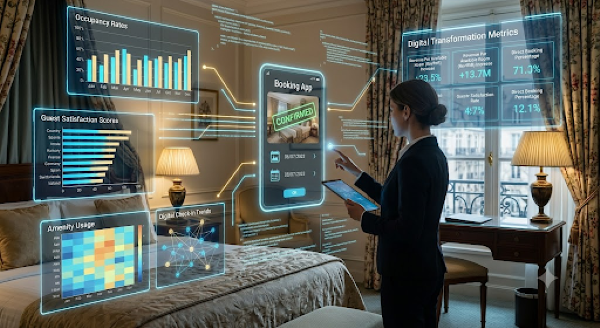
💻 Digital transformation is becoming a key competitive advantage in leisure
Leisure companies that invest in digital technology are improving customer experiences, streamlining operations, and creating new revenue opportunities. Investors should pay close attention to how effectively management integrates technology into its long-term business strategy.
📱 Mobile apps, personalization, and AI are reshaping the guest experience
From mobile check-in and digital room keys to personalized recommendations and AI-powered customer service, technology is making travel and entertainment more convenient while increasing customer satisfaction and spending.
📊 Data-driven pricing and marketing can significantly boost profitability
Real-time analytics allow hotels, airlines, cruise lines, and theme parks to optimize pricing, improve occupancy, and target marketing more effectively. Companies that leverage data successfully often generate stronger margins and higher returns on investment.
🚀 Digital leaders are well positioned for long-term growth
The strongest leisure companies are combining cloud computing, automation, artificial intelligence, and direct digital booking platforms to build durable competitive advantages. Higher direct bookings, stronger loyalty programs, and expanding digital revenue streams can support long-term shareholder value.
How Digital Transformation Is Changing Leisure Companies
Why Is Digital Transformation Reshaping the Leisure Industry?
Digital transformation is reshaping the leisure industry from the ground up, fundamentally changing how companies acquire customers, deliver experiences, manage operations, and generate revenue. Companies that embrace digital change are gaining powerful competitive advantages, while those that lag behind risk losing relevance in an increasingly tech-savvy consumer market. For investors, understanding the digital transformation journey of specific leisure companies is becoming as important as analyzing their traditional financial metrics.
How Has Online Booking Changed the Leisure Business?
Online booking and distribution has been the first and most visible dimension of leisure's digital transformation. The shift from travel agents and phone reservations to digital platforms has redistributed enormous economic value across the value chain. Online travel agencies like Booking Holdings and Expedia captured a dominant share of hotel, flight, and vacation package bookings, challenging traditional distribution models. Hotel companies have responded by investing aggressively in their direct booking websites and apps, offering loyalty points incentives for guests who book directly rather than through third-party platforms.
How Is Mobile Technology Improving Guest Experiences?
Mobile technology has transformed the on-property guest experience. Hotel chains now offer mobile check-in and digital room keys that allow guests to bypass the front desk entirely, improving convenience while reducing labor costs. Theme parks use mobile apps for queue management, ride reservations, mobile food ordering, and interactive park navigation. Cruise lines have introduced wearable technology that guests use to access their staterooms, make purchases, and communicate with crew across the ship. These innovations simultaneously improve the guest experience and generate valuable behavioral data.
Why Are Data Analytics and Personalization So Valuable?
Data analytics and personalization are creating new opportunities for leisure companies to deepen customer relationships and increase monetization. By analyzing booking histories, browsing behavior, in-property spending patterns, and loyalty program data, companies can tailor offers, recommendations, and pricing to individual preferences. A guest who always books spa treatments is now offered a spa package at check-in. A frequent business traveler is pre-assigned a room on a quiet floor. These personalized touches increase satisfaction, loyalty, and per-guest revenue simultaneously.
How Does Dynamic Pricing Improve Profitability?
Revenue management has become a sophisticated science powered by real-time data analytics and machine learning algorithms. Hotels, cruise lines, and airlines now adjust pricing dynamically in response to demand signals, competitive pricing, and inventory availability. Algorithms can process thousands of variables simultaneously to optimize prices across millions of room-nights or flight seats, capturing more revenue than traditional static pricing approaches while also improving occupancy through strategic discounting during soft periods.
How Has Digital Marketing Changed Customer Acquisition?
Social media and digital marketing have transformed customer acquisition in the leisure industry. Influencer marketing, user-generated content, and targeted social advertising allow leisure companies to reach specific demographic segments with precision. A luxury resort can showcase aspirational imagery to high-income travelers who have recently searched for tropical destinations. A theme park can retarget families who visited its website but did not complete a ticket purchase. The ability to measure and optimize digital marketing spend in real time has dramatically improved marketing efficiency.
Why Is Cloud Computing Improving Leisure Operations?
Cloud computing and software as a service platforms have modernized back-office operations. Property management systems, customer relationship management tools, and yield management platforms are now delivered as cloud services, reducing IT infrastructure costs and enabling smaller operators to access enterprise-grade technology. This democratization of technology is both a threat to large operators who previously had technology as a competitive advantage and an opportunity for the broader industry to improve operational efficiency.
How Is Artificial Intelligence Transforming Leisure Companies?
Artificial intelligence and machine learning are beginning to penetrate deeper into leisure operations. AI-powered chatbots handle routine customer service inquiries, reducing call center costs while improving response times. Predictive maintenance algorithms analyze equipment sensor data to identify cruise ship or theme park ride components that are likely to fail before they do, reducing unplanned downtime and improving safety. Facial recognition technology is accelerating access and personalization at theme parks and resorts in markets where it is permitted.
What Does Digital Transformation Mean for Long-Term Investors?
The digital transformation of leisure is far from complete. The companies leading this transformation are building competitive advantages in customer experience, operational efficiency, and data monetization that will compound over time. For investors, the clearest signal of digital leadership is not just technology investment spending, but the tangible outcomes: higher direct booking rates, improved guest satisfaction scores, better revenue per available unit, and expanding digital revenue streams that diversify away from traditional transactional income.
🚀 Expand Your Edge: Elite Leisure Industry Investment Intelligence
The leisure industry spans travel, entertainment, hospitality, gaming, sports, recreation, and experiential businesses that benefit from rising consumer spending and long-term demographic trends. Our Leisure Industry Investor Intelligence Hub brings together comprehensive research covering industry fundamentals, market-leading companies, macroeconomic drivers, financial analysis, emerging technologies, and future growth opportunities. Explore the curated resources below to build a deeper understanding of one of the market's most dynamic sectors.
🌎 Industry Fundamentals & Market Leaders
🎯 Leisure Industry Sectors & Investment Opportunities
📊 Financial Analysis & Portfolio Strategy
🤖 Technology, AI & Industry Innovation
🌍 Economic Trends & Market Drivers
⚠️ Risk Management & Smart Investing


















Last updated on July 28th 2026 by Noah Brody
💻 Digital transformation is becoming a key competitive advantage in leisure
Leisure companies that invest in digital technology are improving customer experiences, streamlining operations, and creating new revenue opportunities. Investors should pay close attention to how effectively management integrates technology into its long-term business strategy.
📱 Mobile apps, personalization, and AI are reshaping the guest experience
From mobile check-in and digital room keys to personalized recommendations and AI-powered customer service, technology is making travel and entertainment more convenient while increasing customer satisfaction and spending.
📊 Data-driven pricing and marketing can significantly boost profitability
Real-time analytics allow hotels, airlines, cruise lines, and theme parks to optimize pricing, improve occupancy, and target marketing more effectively. Companies that leverage data successfully often generate stronger margins and higher returns on investment.
🚀 Digital leaders are well positioned for long-term growth
The strongest leisure companies are combining cloud computing, automation, artificial intelligence, and direct digital booking platforms to build durable competitive advantages. Higher direct bookings, stronger loyalty programs, and expanding digital revenue streams can support long-term shareholder value.
How Digital Transformation Is Changing Leisure Companies
Why Is Digital Transformation Reshaping the Leisure Industry?
Digital transformation is reshaping the leisure industry from the ground up, fundamentally changing how companies acquire customers, deliver experiences, manage operations, and generate revenue. Companies that embrace digital change are gaining powerful competitive advantages, while those that lag behind risk losing relevance in an increasingly tech-savvy consumer market. For investors, understanding the digital transformation journey of specific leisure companies is becoming as important as analyzing their traditional financial metrics.
How Has Online Booking Changed the Leisure Business?
Online booking and distribution has been the first and most visible dimension of leisure's digital transformation. The shift from travel agents and phone reservations to digital platforms has redistributed enormous economic value across the value chain. Online travel agencies like Booking Holdings and Expedia captured a dominant share of hotel, flight, and vacation package bookings, challenging traditional distribution models. Hotel companies have responded by investing aggressively in their direct booking websites and apps, offering loyalty points incentives for guests who book directly rather than through third-party platforms.
How Is Mobile Technology Improving Guest Experiences?
Mobile technology has transformed the on-property guest experience. Hotel chains now offer mobile check-in and digital room keys that allow guests to bypass the front desk entirely, improving convenience while reducing labor costs. Theme parks use mobile apps for queue management, ride reservations, mobile food ordering, and interactive park navigation. Cruise lines have introduced wearable technology that guests use to access their staterooms, make purchases, and communicate with crew across the ship. These innovations simultaneously improve the guest experience and generate valuable behavioral data.
Why Are Data Analytics and Personalization So Valuable?
Data analytics and personalization are creating new opportunities for leisure companies to deepen customer relationships and increase monetization. By analyzing booking histories, browsing behavior, in-property spending patterns, and loyalty program data, companies can tailor offers, recommendations, and pricing to individual preferences. A guest who always books spa treatments is now offered a spa package at check-in. A frequent business traveler is pre-assigned a room on a quiet floor. These personalized touches increase satisfaction, loyalty, and per-guest revenue simultaneously.
How Does Dynamic Pricing Improve Profitability?
Revenue management has become a sophisticated science powered by real-time data analytics and machine learning algorithms. Hotels, cruise lines, and airlines now adjust pricing dynamically in response to demand signals, competitive pricing, and inventory availability. Algorithms can process thousands of variables simultaneously to optimize prices across millions of room-nights or flight seats, capturing more revenue than traditional static pricing approaches while also improving occupancy through strategic discounting during soft periods.
How Has Digital Marketing Changed Customer Acquisition?
Social media and digital marketing have transformed customer acquisition in the leisure industry. Influencer marketing, user-generated content, and targeted social advertising allow leisure companies to reach specific demographic segments with precision. A luxury resort can showcase aspirational imagery to high-income travelers who have recently searched for tropical destinations. A theme park can retarget families who visited its website but did not complete a ticket purchase. The ability to measure and optimize digital marketing spend in real time has dramatically improved marketing efficiency.
Why Is Cloud Computing Improving Leisure Operations?
Cloud computing and software as a service platforms have modernized back-office operations. Property management systems, customer relationship management tools, and yield management platforms are now delivered as cloud services, reducing IT infrastructure costs and enabling smaller operators to access enterprise-grade technology. This democratization of technology is both a threat to large operators who previously had technology as a competitive advantage and an opportunity for the broader industry to improve operational efficiency.
How Is Artificial Intelligence Transforming Leisure Companies?
Artificial intelligence and machine learning are beginning to penetrate deeper into leisure operations. AI-powered chatbots handle routine customer service inquiries, reducing call center costs while improving response times. Predictive maintenance algorithms analyze equipment sensor data to identify cruise ship or theme park ride components that are likely to fail before they do, reducing unplanned downtime and improving safety. Facial recognition technology is accelerating access and personalization at theme parks and resorts in markets where it is permitted.
What Does Digital Transformation Mean for Long-Term Investors?
The digital transformation of leisure is far from complete. The companies leading this transformation are building competitive advantages in customer experience, operational efficiency, and data monetization that will compound over time. For investors, the clearest signal of digital leadership is not just technology investment spending, but the tangible outcomes: higher direct booking rates, improved guest satisfaction scores, better revenue per available unit, and expanding digital revenue streams that diversify away from traditional transactional income.
🚀 Expand Your Edge: Elite Leisure Industry Investment Intelligence
The leisure industry spans travel, entertainment, hospitality, gaming, sports, recreation, and experiential businesses that benefit from rising consumer spending and long-term demographic trends. Our Leisure Industry Investor Intelligence Hub brings together comprehensive research covering industry fundamentals, market-leading companies, macroeconomic drivers, financial analysis, emerging technologies, and future growth opportunities. Explore the curated resources below to build a deeper understanding of one of the market's most dynamic sectors.
🌎 Industry Fundamentals & Market Leaders
🎯 Leisure Industry Sectors & Investment Opportunities
📊 Financial Analysis & Portfolio Strategy
🤖 Technology, AI & Industry Innovation
🌍 Economic Trends & Market Drivers
⚠️ Risk Management & Smart Investing